Go Back to Hiding in the Shadows
Sound & Expanded-Media Performance · Generative Audiovisual Collection
Pandelis Diamantides
2018–2019
Overview
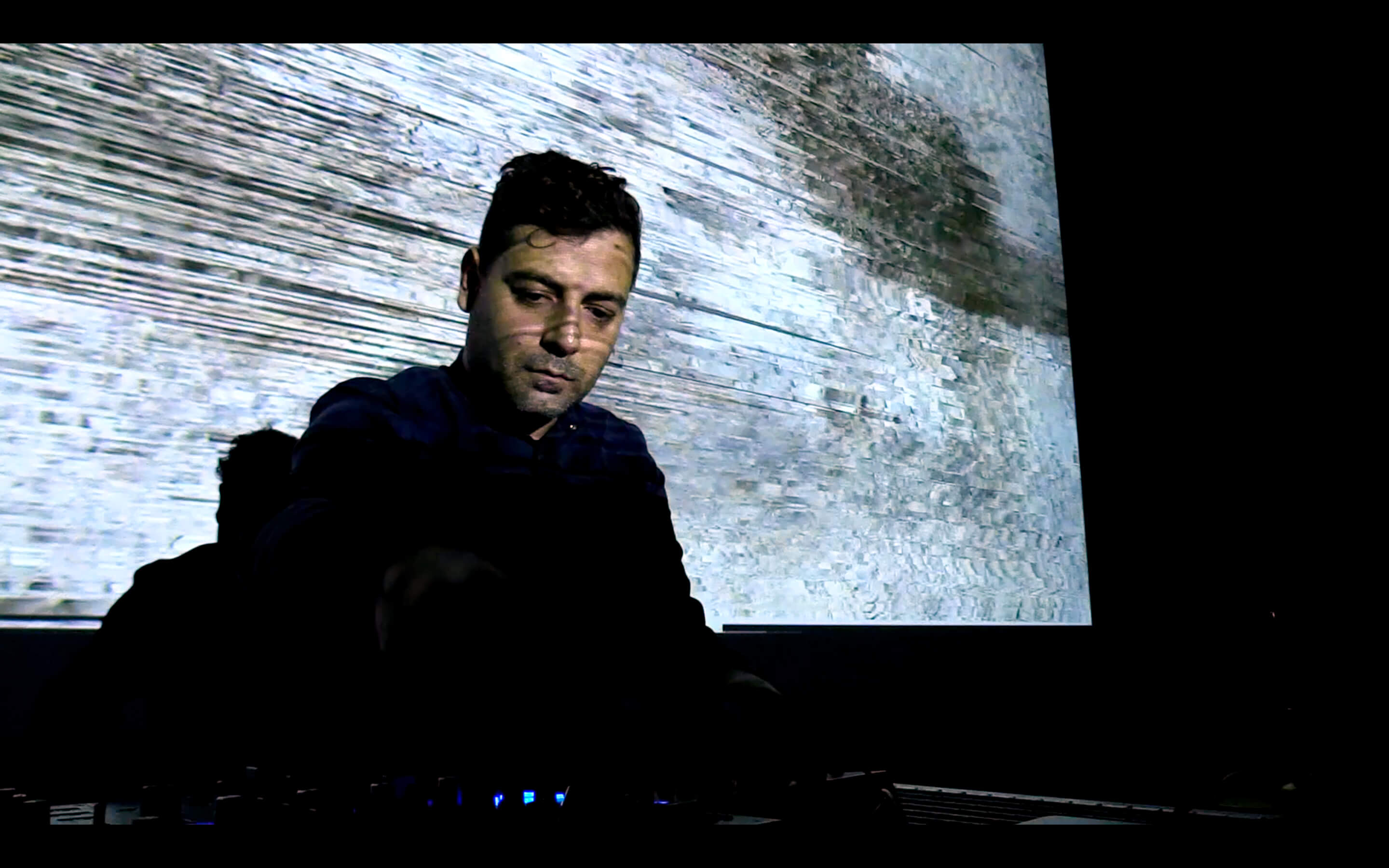
Go Back to Hiding in the Shadows is a generative audiovisual performance and collection of digital artworks by Pandelis Diamantides exploring the relationships between place, identity, memory and the boundaries between organic and computational processes. Rooted in the landscapes of the Troodos mountain range in Cyprus, the work brings together field recordings, deconstructed human voices, acoustic instruments, photography and moving image. These materials are transformed through custom-built generative systems into evolving audiovisual compositions that move between recognisable traces of the physical world and increasingly abstract digital environments.
The work emerged from a personal investigation into the relationship between geographical origin and individual identity, questioning whether belonging can be defined through territories, national narratives or cultural representations. Rather than reconstructing a place, it explores the textures, structures and experiences through which a personal relationship with that place is formed. Originally conceived as a live audiovisual performance, premiered at the International Film Festival Rotterdam in January 2018, Go Back to Hiding in the Shadows subsequently developed into a collection of audiovisual artworks and an electronic music album released in April 2019.
The Work
Go Back to Hiding in the Shadows began as a personal journey towards understanding the relationship between memory, geographical origin and the construction of identity. Returning repeatedly to Cyprus and the Eastern Mediterranean, where the foundations of his personal experience and understanding of the world were formed, Diamantides sought to investigate the less visible connections between an individual and the environment from which they emerge.
The work questions conventional definitions of place and belonging, particularly the tendency to identify origins through the political and cultural structures of nation and country. Such representations often reduce the complexity of individual experience to fixed geographical or collective identities. Rather than approaching Cyprus through its familiar symbols, historical narratives or recognisable landscapes, the work turns towards the material and perceptual characteristics of the environment itself. Field recordings, photographs and videos collected around the Troodos mountain range become the starting point for an audiovisual investigation into the relationships between physical matter, personal memory and technological transformation.
Place, Memory and Identity
The landscapes of Troodos provide both the physical source material and the conceptual foundation of the work. The mountain range, with its exposed geological formations and complex natural textures, offers an environment in which the relationships between surface, structure and transformation become directly perceptible.
Rock formations, plants, animals and patterns of natural movement are observed, photographed and recorded. These materials are not collected in order to reconstruct a recognisable landscape but to investigate the characteristics through which a place acquires meaning beyond its geographical representation. In this process, the landscape becomes a repository of personal impressions rather than a fixed image of cultural identity.
The work approaches memory as something continuously reconstructed through encounters with material, sound and image. A place is not simply remembered through its recognisable features but through fragments of experience, sensory associations and the changing relationships between the individual and the surrounding environment.
The title, Go Back to Hiding in the Shadows, suggests a movement towards interiority: a retreat from externally imposed definitions of identity into a more intimate and subjective relationship with the world. This movement is not presented as an escape from reality but as an attempt to encounter it outside conventional structures of representation.
Material and Transformation
The audiovisual composition is constructed from a collection of heterogeneous materials: instrumental and electronic sounds, deconstructed human voices, field recordings, photographs, videos and processed imagery of the natural environment. These elements are subjected to algorithmic processes that analyse, fragment, reorganise and transform their underlying characteristics. Through custom-developed software, Diamantides creates generative relationships between sound and moving image, allowing the original materials to unfold into new configurations. The resulting compositions move continuously between organic references and digital abstraction. Recognisable traces of human voices or physical environments appear within complex electronic textures, while images derived from natural forms dissolve into unstable visual structures. Rather than translating sound directly into image, or using visuals to illustrate musical events, the composition establishes relationships through a shared artistic narrative. Sound and image retain their individual qualities while contributing to a larger audiovisual environment. Their interactions emerge through rhythm, texture, movement, contrast and duration. The work approaches technological processes not as neutral instruments of reproduction but as active materials through which the characteristics of the original sources can be transformed and reconsidered.
Between the Organic and the Digital
A central investigation within Go Back to Hiding in the Shadows concerns the relationship between physical material and its computational interpretation. The source material originates in tangible environments: landscapes, geological formations, biological activity, human voices and acoustic instruments. Through algorithmic processing, these elements are reorganised into digital structures that retain traces of their origins while acquiring new forms. The resulting audiovisual compositions exist between the recognisable and the abstract, the physical and the simulated. Rather than treating organic and digital processes as opposing conditions, the work investigates their interdependence. The original recordings and images provide the material foundation, while generative systems introduce transformation, variation and unexpected relationships. The algorithm becomes part of the compositional process, creating possibilities that emerge through the interaction between programmed structures and artistic decisions. This relationship between human intention and computational behaviour introduces a productive uncertainty. While the generative processes allow material to develop beyond fixed sequences, the resulting compositions remain guided by aesthetic judgement and the broader narrative of the work.
In this sense, Go Back to Hiding in the Shadows proposes a dialogue between intuition and computation, allowing technological processes to contribute to the transformation of personal experience without reducing it to information alone.
From Live Performance to Audiovisual Collection
Go Back to Hiding in the Shadows was originally conceived as a live audiovisual performance, with its compositional structure developed through the possibilities of real-time electronic sound and generative moving image. Each presentation became a new articulation of the work. The relationship between sound, imagery and performance space remained open to variation, allowing the surrounding architecture and acoustic conditions to influence the experience. The work evolved through performances at festivals, galleries and experimental music venues across Europe and beyond, including the International Film Festival Rotterdam, Retune Festival in Berlin, Oddstream Festival in Arnhem, Patchlab Festival in Kraków and Fotonica Festival at MACRO in Rome. This process of repeated performance became fundamental to the development of the audiovisual material. Over time, the challenge emerged of translating the fluidity of live performance into a collection of autonomous compositions that could retain the generative character of the original work. Through further development of the custom software, improvisational structures were gradually transformed into compositions capable of existing beyond the stage. The resulting audiovisual collection and electronic music album, released in April 2019, preserve this relationship between structure and variation, bringing together materials developed through the live performances into a series of individual works. The collection extends the original investigation into place, identity and transformation, allowing the audiovisual compositions to be experienced independently while remaining connected through a shared conceptual foundation.
A Narrative of Becoming
At the centre of Go Back to Hiding in the Shadows lies an understanding of identity as something continuously formed through relationships with places, experiences and environments. The work resists the idea that identity can be represented through a stable collection of cultural or geographical characteristics. Instead, it approaches belonging as an evolving relationship between memory, material and personal experience. The transformation of field recordings, images and organic textures through computational systems becomes a parallel process to the transformation of memory itself. Just as remembered experiences are fragmented, reorganised and reinterpreted over time, the audiovisual materials move through changing configurations in which their original characteristics are simultaneously preserved and transformed. The resulting compositions do not reconstruct a landscape or communicate a predetermined account of personal history. They create an environment in which traces of place and memory can be encountered through abstraction, rhythm and movement.
Situated between experimental electronic music, generative audiovisual art and expanded-media performance, Go Back to Hiding in the Shadows investigates how technological processes can become a means of exploring deeply personal experiences. Rather than defining where one belongs, the work considers how belonging is continuously constructed through the relationship between the individual and the surrounding world. An audiovisual narrative of becoming, in which place is not something to be represented but something to be experienced, remembered and continually reimagined.
Documentation
Go Back to Hiding in the Shadows — Audiovisual Performance
Pandelis Diamantides
2018–2019
Live audiovisual performance combining electronic composition, field recordings, generative moving image and custom-developed software.
Duration: approximately 25–35 minutes.
Go Back to Hiding in the Shadows — Audiovisual Collection
Pandelis Diamantides
2019
A collection of generative audiovisual works developed from the original performance, combining processed sounds and imagery collected around the Troodos mountain range.
Selected works include:
Owns Nothing to the Light of Day
A Replay from Aeons Past
New Ideas for Increased Mobility
Go Back to Hiding in the Shadows — Music Album
Pandelis Diamantides
Released 11 April 2019
The electronic music album consists of seven compositions developed through the audiovisual performance:
Go Back to Hiding in the Shadows — 05:16
A Replay from Aeons Past — 02:14
With Every Tear a Dream — 04:07
Camp Out on Asteroids — 04:39
Owns Nothing to the Light of Day — 03:14
New Ideas for Increased Mobility — 03:26
Quickly Photographed and Released Unharmed — 04:09
Selected Presentations
4–31 May 2023
Fullscreen — MMMAD Festival
Madrid, Spain
New Ideas for Increased Mobility, from the Go Back to Hiding in the Shadows collection, presented in a group exhibition of digital artworks across urban screens in Madrid.
October 2019
Espacio Byte — Digital Art Museum
Online Exhibition
Presentation of Go Back to Hiding in the Shadows as a collection of audiovisual artworks.
2019
POCHEN Biennale
Chemnitz, Germany
2019
Voltaje Festival
Bogotá, Colombia
2019
RADAR Festival Beyond Music
Varna, Bulgaria
27 June 2019
FANEROMENI19 Arts Festival
Bank of Cyprus Cultural Foundation
Nicosia, Cyprus
Audiovisual performance with Mathieu Le Sourd (MAOTIK).
13 April 2019
Trippen Concept Store
Berlin, Germany
Album release performance.
8 December 2018
Fotonica Festival
MACRO — Museum of Contemporary Art
Rome, Italy
2018
Patchlab Digital Art Festival
Kraków, Poland
11 October 2018
Oddstream Festival — Hidden Structures
Arnhem, Netherlands
2018
Retune Festival
Berlin, Germany
2018
LOOS
The Hague, Netherlands
24 May 2018
14th Athens Digital Arts Festival — Singularity Now
Megaron — The Athens Concert Hall
Athens, Greece
2018
AVnode
Istanbul, Turkey
27 January 2018
International Film Festival Rotterdam — sound//vision
WORM
Rotterdam, Netherlands
Official world premiere of the audiovisual performance.
Selected Press
Η Κύπρος μου δεν είναι η Κύπρος σου / My Cyprus Is Not Your Cyprus
Philenews — Φιλgood
24 June 2019
Published ahead of the presentation at FANEROMENI19 in Nicosia, the article examines Go Back to Hiding in the Shadows as a personal exploration of place, identity and the relationships between physical environments and digital abstraction. The feature discusses the audiovisual compositions developed from recordings and imagery collected around the Troodos mountain range, addressing the work's rejection of conventional geographical representation in favour of a more subjective understanding of place and belonging.
Oddstream Festival — Interview with Pandelis Diamantides
Oddstream Festival
2018
Conducted ahead of the performance at Oddstream Festival's Hidden Structures programme in Arnhem, the interview explores the conceptual origins of Go Back to Hiding in the Shadows, its relationship to Cyprus and the Eastern Mediterranean, and the artistic processes through which field recordings, imagery and physical materials are transformed using generative software. The conversation also addresses the relationship between human intuition and computational processes, the influence of performance environments and the role of hidden structures within natural and technological systems.
Go Back to Hiding in the Shadows — Espacio Byte
Espacio Byte Digital Art Museum
2019
The museum's presentation discusses the collection as an exploration of the relationships between organic and digital material. It highlights the use of field recordings, photographs and moving images collected around Cyprus' Troodos mountains, and their transformation through custom algorithmic processes into generative audiovisual compositions.
Credits
Concept, electronic composition, moving image, generative systems, custom software and live performance:Pandelis Diamantides
Audiovisual performance and collection: 2018–2019
Album production: Machteld Jacques
Audio mastering: Marcus Papageorgiou
Mastering studio: AV Playroom, Nicosia, Cyprus
Publisher: Studio Pandelis Diamantides
Album release: 11 April 2019, Berlin, Germany
Album release performance curator: Jakub Kubica
International Film Festival Rotterdam premiere curator: Peter van Hoof
Go Back to Hiding in the Shadows
Sound & Expanded-Media Performance · Generative Audiovisual Collection
Pandelis Diamantides
2018–2019
Overview
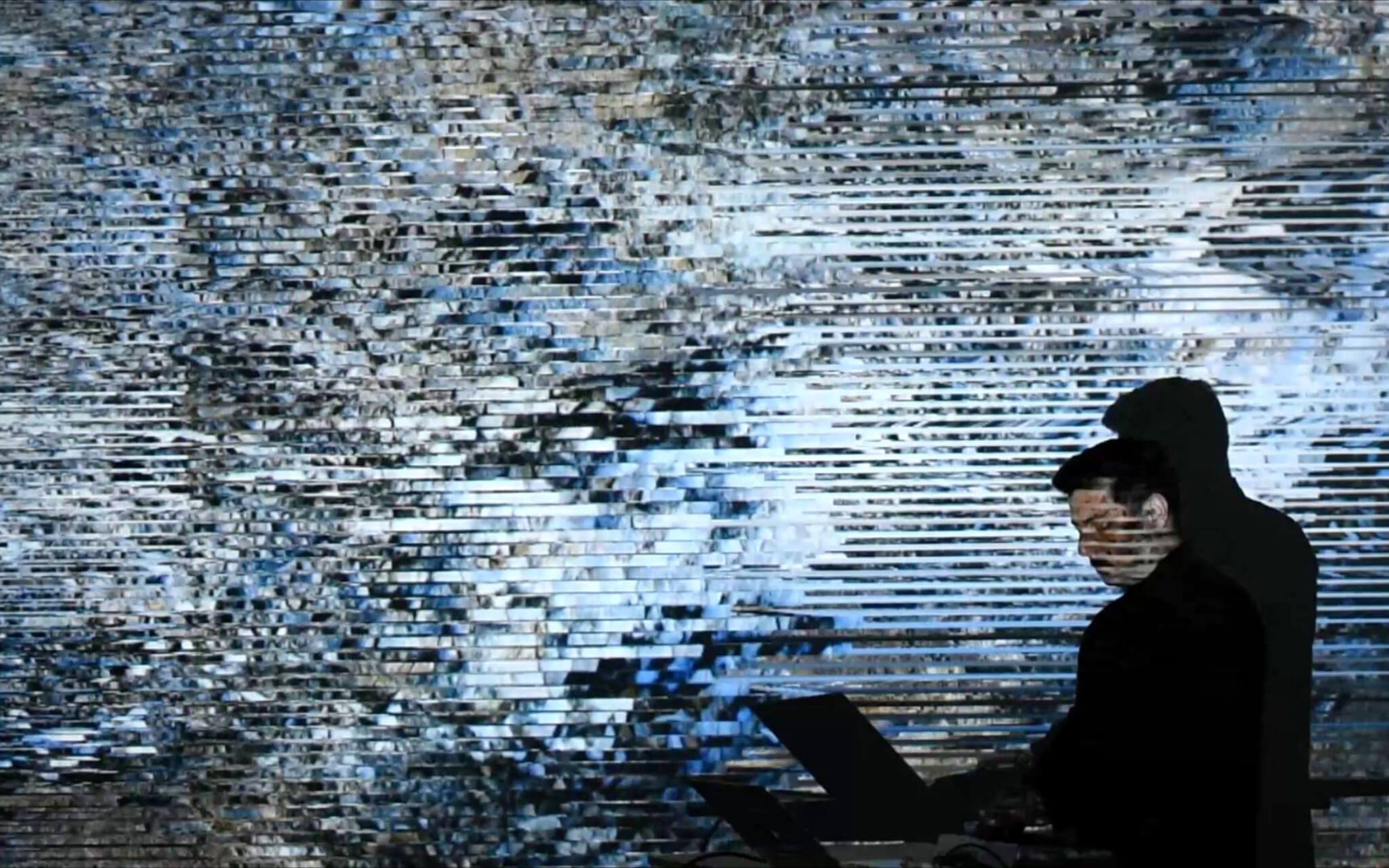
Go Back to Hiding in the Shadows is a generative audiovisual performance and collection of digital artworks by Pandelis Diamantides exploring the relationships between place, identity, memory and the boundaries between organic and computational processes. Rooted in the landscapes of the Troodos mountain range in Cyprus, the work brings together field recordings, deconstructed human voices, acoustic instruments, photography and moving image. These materials are transformed through custom-built generative systems into evolving audiovisual compositions that move between recognisable traces of the physical world and increasingly abstract digital environments.
The work emerged from a personal investigation into the relationship between geographical origin and individual identity, questioning whether belonging can be defined through territories, national narratives or cultural representations. Rather than reconstructing a place, it explores the textures, structures and experiences through which a personal relationship with that place is formed. Originally conceived as a live audiovisual performance, premiered at the International Film Festival Rotterdam in January 2018, Go Back to Hiding in the Shadows subsequently developed into a collection of audiovisual artworks and an electronic music album released in April 2019.
The Work
Go Back to Hiding in the Shadows began as a personal journey towards understanding the relationship between memory, geographical origin and the construction of identity. Returning repeatedly to Cyprus and the Eastern Mediterranean, where the foundations of his personal experience and understanding of the world were formed, Diamantides sought to investigate the less visible connections between an individual and the environment from which they emerge.
The work questions conventional definitions of place and belonging, particularly the tendency to identify origins through the political and cultural structures of nation and country. Such representations often reduce the complexity of individual experience to fixed geographical or collective identities. Rather than approaching Cyprus through its familiar symbols, historical narratives or recognisable landscapes, the work turns towards the material and perceptual characteristics of the environment itself. Field recordings, photographs and videos collected around the Troodos mountain range become the starting point for an audiovisual investigation into the relationships between physical matter, personal memory and technological transformation.
Place, Memory and Identity
The landscapes of Troodos provide both the physical source material and the conceptual foundation of the work. The mountain range, with its exposed geological formations and complex natural textures, offers an environment in which the relationships between surface, structure and transformation become directly perceptible.
Rock formations, plants, animals and patterns of natural movement are observed, photographed and recorded. These materials are not collected in order to reconstruct a recognisable landscape but to investigate the characteristics through which a place acquires meaning beyond its geographical representation. In this process, the landscape becomes a repository of personal impressions rather than a fixed image of cultural identity.
The work approaches memory as something continuously reconstructed through encounters with material, sound and image. A place is not simply remembered through its recognisable features but through fragments of experience, sensory associations and the changing relationships between the individual and the surrounding environment.
The title, Go Back to Hiding in the Shadows, suggests a movement towards interiority: a retreat from externally imposed definitions of identity into a more intimate and subjective relationship with the world. This movement is not presented as an escape from reality but as an attempt to encounter it outside conventional structures of representation.
Material and Transformation
The audiovisual composition is constructed from a collection of heterogeneous materials: instrumental and electronic sounds, deconstructed human voices, field recordings, photographs, videos and processed imagery of the natural environment. These elements are subjected to algorithmic processes that analyse, fragment, reorganise and transform their underlying characteristics. Through custom-developed software, Diamantides creates generative relationships between sound and moving image, allowing the original materials to unfold into new configurations. The resulting compositions move continuously between organic references and digital abstraction. Recognisable traces of human voices or physical environments appear within complex electronic textures, while images derived from natural forms dissolve into unstable visual structures. Rather than translating sound directly into image, or using visuals to illustrate musical events, the composition establishes relationships through a shared artistic narrative. Sound and image retain their individual qualities while contributing to a larger audiovisual environment. Their interactions emerge through rhythm, texture, movement, contrast and duration. The work approaches technological processes not as neutral instruments of reproduction but as active materials through which the characteristics of the original sources can be transformed and reconsidered.
Between the Organic and the Digital
A central investigation within Go Back to Hiding in the Shadows concerns the relationship between physical material and its computational interpretation. The source material originates in tangible environments: landscapes, geological formations, biological activity, human voices and acoustic instruments. Through algorithmic processing, these elements are reorganised into digital structures that retain traces of their origins while acquiring new forms. The resulting audiovisual compositions exist between the recognisable and the abstract, the physical and the simulated. Rather than treating organic and digital processes as opposing conditions, the work investigates their interdependence. The original recordings and images provide the material foundation, while generative systems introduce transformation, variation and unexpected relationships. The algorithm becomes part of the compositional process, creating possibilities that emerge through the interaction between programmed structures and artistic decisions. This relationship between human intention and computational behaviour introduces a productive uncertainty. While the generative processes allow material to develop beyond fixed sequences, the resulting compositions remain guided by aesthetic judgement and the broader narrative of the work.
In this sense, Go Back to Hiding in the Shadows proposes a dialogue between intuition and computation, allowing technological processes to contribute to the transformation of personal experience without reducing it to information alone.
From Live Performance to Audiovisual Collection
Go Back to Hiding in the Shadows was originally conceived as a live audiovisual performance, with its compositional structure developed through the possibilities of real-time electronic sound and generative moving image. Each presentation became a new articulation of the work. The relationship between sound, imagery and performance space remained open to variation, allowing the surrounding architecture and acoustic conditions to influence the experience. The work evolved through performances at festivals, galleries and experimental music venues across Europe and beyond, including the International Film Festival Rotterdam, Retune Festival in Berlin, Oddstream Festival in Arnhem, Patchlab Festival in Kraków and Fotonica Festival at MACRO in Rome. This process of repeated performance became fundamental to the development of the audiovisual material. Over time, the challenge emerged of translating the fluidity of live performance into a collection of autonomous compositions that could retain the generative character of the original work. Through further development of the custom software, improvisational structures were gradually transformed into compositions capable of existing beyond the stage. The resulting audiovisual collection and electronic music album, released in April 2019, preserve this relationship between structure and variation, bringing together materials developed through the live performances into a series of individual works. The collection extends the original investigation into place, identity and transformation, allowing the audiovisual compositions to be experienced independently while remaining connected through a shared conceptual foundation.
A Narrative of Becoming
At the centre of Go Back to Hiding in the Shadows lies an understanding of identity as something continuously formed through relationships with places, experiences and environments. The work resists the idea that identity can be represented through a stable collection of cultural or geographical characteristics. Instead, it approaches belonging as an evolving relationship between memory, material and personal experience. The transformation of field recordings, images and organic textures through computational systems becomes a parallel process to the transformation of memory itself. Just as remembered experiences are fragmented, reorganised and reinterpreted over time, the audiovisual materials move through changing configurations in which their original characteristics are simultaneously preserved and transformed. The resulting compositions do not reconstruct a landscape or communicate a predetermined account of personal history. They create an environment in which traces of place and memory can be encountered through abstraction, rhythm and movement.
Situated between experimental electronic music, generative audiovisual art and expanded-media performance, Go Back to Hiding in the Shadows investigates how technological processes can become a means of exploring deeply personal experiences. Rather than defining where one belongs, the work considers how belonging is continuously constructed through the relationship between the individual and the surrounding world. An audiovisual narrative of becoming, in which place is not something to be represented but something to be experienced, remembered and continually reimagined.
Documentation
Go Back to Hiding in the Shadows — Audiovisual Performance
Pandelis Diamantides
2018–2019
Live audiovisual performance combining electronic composition, field recordings, generative moving image and custom-developed software.
Duration: approximately 25–35 minutes.
Go Back to Hiding in the Shadows — Audiovisual Collection
Pandelis Diamantides
2019
A collection of generative audiovisual works developed from the original performance, combining processed sounds and imagery collected around the Troodos mountain range.
Selected works include:
Owns Nothing to the Light of Day
A Replay from Aeons Past
New Ideas for Increased Mobility
Go Back to Hiding in the Shadows — Music Album
Pandelis Diamantides
Released 11 April 2019
The electronic music album consists of seven compositions developed through the audiovisual performance:
Go Back to Hiding in the Shadows — 05:16
A Replay from Aeons Past — 02:14
With Every Tear a Dream — 04:07
Camp Out on Asteroids — 04:39
Owns Nothing to the Light of Day — 03:14
New Ideas for Increased Mobility — 03:26
Quickly Photographed and Released Unharmed — 04:09
Selected Presentations
4–31 May 2023
Fullscreen — MMMAD Festival
Madrid, Spain
New Ideas for Increased Mobility, from the Go Back to Hiding in the Shadows collection, presented in a group exhibition of digital artworks across urban screens in Madrid.
October 2019
Espacio Byte — Digital Art Museum
Online Exhibition
Presentation of Go Back to Hiding in the Shadows as a collection of audiovisual artworks.
2019
POCHEN Biennale
Chemnitz, Germany
2019
Voltaje Festival
Bogotá, Colombia
2019
RADAR Festival Beyond Music
Varna, Bulgaria
27 June 2019
FANEROMENI19 Arts Festival
Bank of Cyprus Cultural Foundation
Nicosia, Cyprus
Audiovisual performance with Mathieu Le Sourd (MAOTIK).
13 April 2019
Trippen Concept Store
Berlin, Germany
Album release performance.
8 December 2018
Fotonica Festival
MACRO — Museum of Contemporary Art
Rome, Italy
2018
Patchlab Digital Art Festival
Kraków, Poland
11 October 2018
Oddstream Festival — Hidden Structures
Arnhem, Netherlands
2018
Retune Festival
Berlin, Germany
2018
LOOS
The Hague, Netherlands
24 May 2018
14th Athens Digital Arts Festival — Singularity Now
Megaron — The Athens Concert Hall
Athens, Greece
2018
AVnode
Istanbul, Turkey
27 January 2018
International Film Festival Rotterdam — sound//vision
WORM
Rotterdam, Netherlands
Official world premiere of the audiovisual performance.
Selected Press
Η Κύπρος μου δεν είναι η Κύπρος σου / My Cyprus Is Not Your Cyprus
Philenews — Φιλgood
24 June 2019
Published ahead of the presentation at FANEROMENI19 in Nicosia, the article examines Go Back to Hiding in the Shadows as a personal exploration of place, identity and the relationships between physical environments and digital abstraction. The feature discusses the audiovisual compositions developed from recordings and imagery collected around the Troodos mountain range, addressing the work's rejection of conventional geographical representation in favour of a more subjective understanding of place and belonging.
Oddstream Festival — Interview with Pandelis Diamantides
Oddstream Festival
2018
Conducted ahead of the performance at Oddstream Festival's Hidden Structures programme in Arnhem, the interview explores the conceptual origins of Go Back to Hiding in the Shadows, its relationship to Cyprus and the Eastern Mediterranean, and the artistic processes through which field recordings, imagery and physical materials are transformed using generative software. The conversation also addresses the relationship between human intuition and computational processes, the influence of performance environments and the role of hidden structures within natural and technological systems.
Go Back to Hiding in the Shadows — Espacio Byte
Espacio Byte Digital Art Museum
2019
The museum's presentation discusses the collection as an exploration of the relationships between organic and digital material. It highlights the use of field recordings, photographs and moving images collected around Cyprus' Troodos mountains, and their transformation through custom algorithmic processes into generative audiovisual compositions.
Credits
Concept, electronic composition, moving image, generative systems, custom software and live performance:Pandelis Diamantides
Audiovisual performance and collection: 2018–2019
Album production: Machteld Jacques
Audio mastering: Marcus Papageorgiou
Mastering studio: AV Playroom, Nicosia, Cyprus
Publisher: Studio Pandelis Diamantides
Album release: 11 April 2019, Berlin, Germany
Album release performance curator: Jakub Kubica
International Film Festival Rotterdam premiere curator: Peter van Hoof